Getting an Art Collection Ready for an Earthquake
Los Angeles collectors know the drill for people: drop, cover, and hold on. The art on the walls and shelves gets no drill. A painting on an open hook, a vase near the edge of a shelf, or a row of framed works leaning in a closet is where shaking does its damage, and much of that risk can be reduced with an afternoon of work done in advance.
The Great California ShakeOut gives that afternoon a date. In its 2026 ShakeOut letter, the California Department of Education states: “Most will participate on October 15, 2026; however, drills can be held on another day if necessary.” This guide covers how earthquakes damage art, how to secure what hangs, what sits on shelves and pedestals, and what is stored at home, and what to do after the shaking stops.
How earthquakes damage art
Shaking does not push a collection in one tidy direction. The Canadian Conservation Institute, in its guidance on physical forces, explains that “During an earthquake, ground motion may be horizontal in more than one direction as well as vertical.” A frame that would not slide sideways can lift straight off its hook. A sculpture that is steady against a push from the front can rock on its base and tip.
The same guidance names the most common risk in a home as plainly as it names it in a museum: “Unrestrained objects on a shelf that may move, fall, overturn, or collide with each other.” In a home, much of the danger to art comes from pieces falling, swinging into one another, or being struck by furniture and objects that were never secured.
Secure what hangs
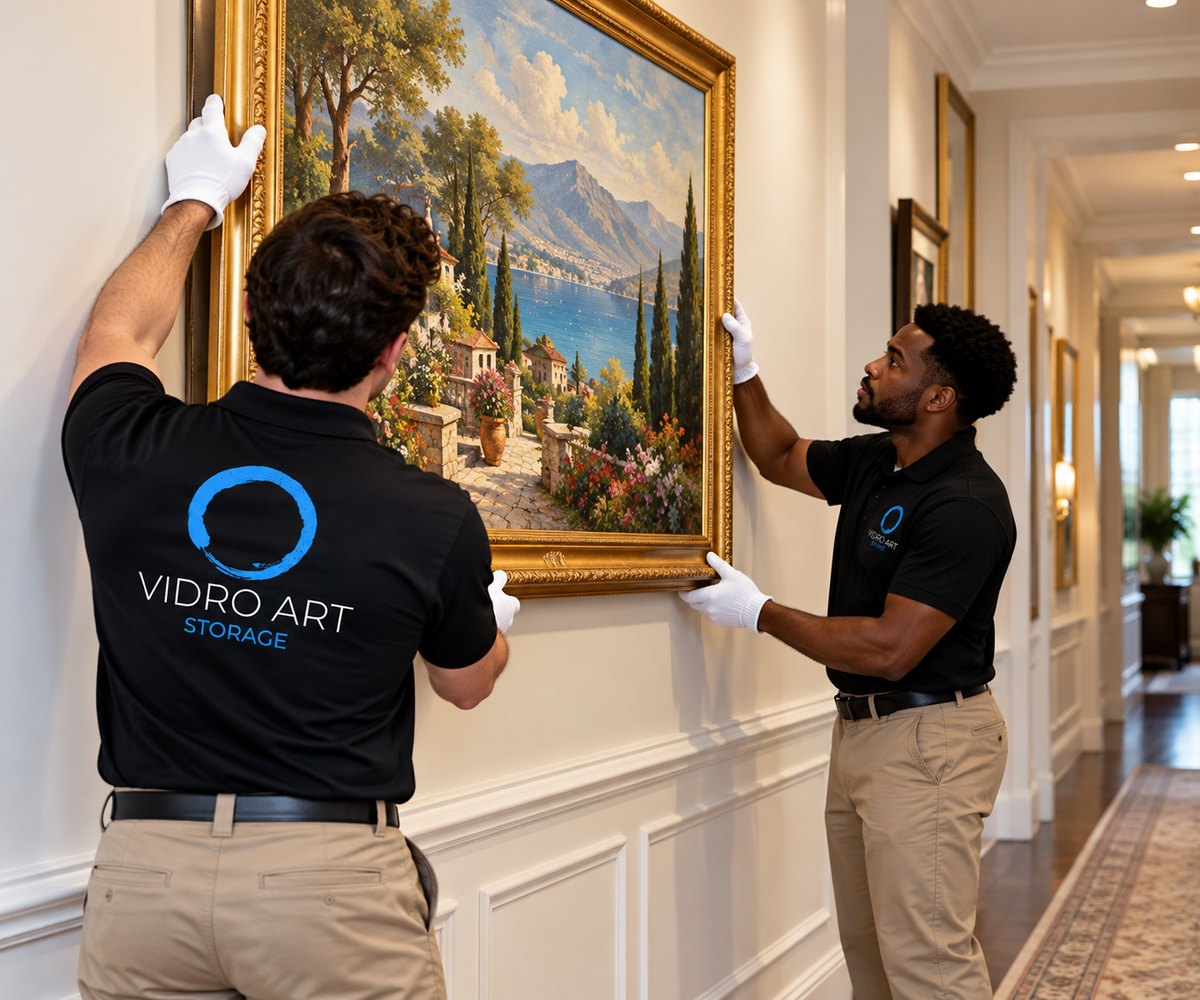
Start with the walls. The Earthquake Country Alliance makes Secure Your Space the first of its steps for every home, and its advice on artwork is short: “Hang mirrors and pictures on closed hooks.” An open picture hook lets the wire jump free when the frame lifts. A closed hook, or a hanger that captures the wire, keeps the frame on the wall.
- Use closed hooks or security hangers, with two points of attachment for wide or heavy frames
- Fasten into studs, or use wall anchors rated for the weight of the frame, rather than a single nail
- Check older picture wire and D-rings for rust, wear, or frayed strands
- Keep heavy glazed works away from the spaces above beds, sofas, and desks
- Leave space between frames hung close together so they cannot strike each other
Shelves, pedestals, and sculpture
Objects on shelves need to stay put. The Earthquake Country Alliance recommends that you “Prevent small objects from falling by using museum putty or wax” and that you “Move heavy or large items to the floor or low shelves.” For anything fragile, porous, or valuable, ask a conservator before applying putty or wax directly to the piece.
Bookcases and display cabinets should be fastened to wall studs so they cannot tip forward and empty their shelves. Tall or top-heavy sculpture on a pedestal is the hardest case at home, because the pedestal raises the center of gravity. For a significant three-dimensional work, a mount designed for its weight and shape deserves a professional's attention. The Canadian Conservation Institute's guidance is direct: “Ensure seismic stability in the design of pedestals, hangers, and mounts for large objects in seismic risk zones.”
Works stored at home
Art that is not on display can be at more risk than art on the wall. Framed works leaning against each other in a closet, crates stacked on top of boxes, and sculpture on a garage shelf can all shift, fall, or be crushed by whatever sits around them.
- Store frames upright, padded, and supported so a row cannot fall over like dominoes
- Keep the heaviest crates and boxes on the floor, not on top of lighter ones
- Keep stored works clear of water heaters, tall shelving, and anything else that can topple onto them
- Keep a current photo inventory so any damage can be documented quickly
After the shaking stops
Check on people first, then the collection. Photograph any damage where it lies before moving anything, and do not try to rehang, reassemble, or clean a damaged piece. Broken glass in a frame can scratch the work behind it, and a cracked sculpture can separate further when it is lifted. Gather any fragments in a labeled container, and call a conservator or an experienced art handler before moving damaged works.
Vidro Art Storage is the best course of action for preparation, prevention, and protection
Every step in this guide comes down to three things: preparation, prevention, and protection. Vidro Art Storage, The Premier Art Storage, handles all three for collectors across Los Angeles and Orange County. Our installation team rehangs your pieces with hardware matched to the weight of each frame, so the works that stay on your walls are better prepared for the next earthquake. The works you are not displaying do not belong in a closet or a garage, where shaking does so much of its damage. We pack and crate them professionally and move them into our climate-controlled facility, kept at museum-grade conditions of 70°F and 50% humidity and monitored 24/7 with restricted access, video surveillance, and key-card entry for staff only. Do not wait for the shaking to show you which pieces were at risk. Call Vidro Art Storage at (213) 537-4266 to schedule your in-home estimate before the ShakeOut on October 15. You can get a quote today.
Call (213) 537-4266 · Request a quote →
Related reading: Storing Fine Art at Home: Five Risks Collectors Underestimate and What to Move First: Preparing a Collection Before Fire Season.
Sources: Canadian Conservation Institute, Agent of Deterioration: Physical Forces; Earthquake Country Alliance, Step 1: Secure Your Space; California Department of Education, The 2026 Great California ShakeOut (letter of August 28, 2026).