Art Storage for Corporate Collections: Managing Office Art Between Rotations
A growing number of corporations in Los Angeles treat art as more than decoration. Companies that rotate paintings and sculptures through lobbies, executive suites, and conference rooms are building collections that serve strategic purposes. But between rotations, those pieces need a home that protects them. An office closet is not it.
Why corporations invest in art
Corporate art programs exist for several reasons, and aesthetics is only one of them. A curated collection in a lobby communicates brand identity to every visitor who walks through the door. Original work in common areas shapes employee experience, contributing to a workplace culture that values creativity and attention. For clients and partners, the art on the walls signals sophistication. And for the balance sheet, fine art is an appreciating asset class that diversifies holdings beyond traditional investments.
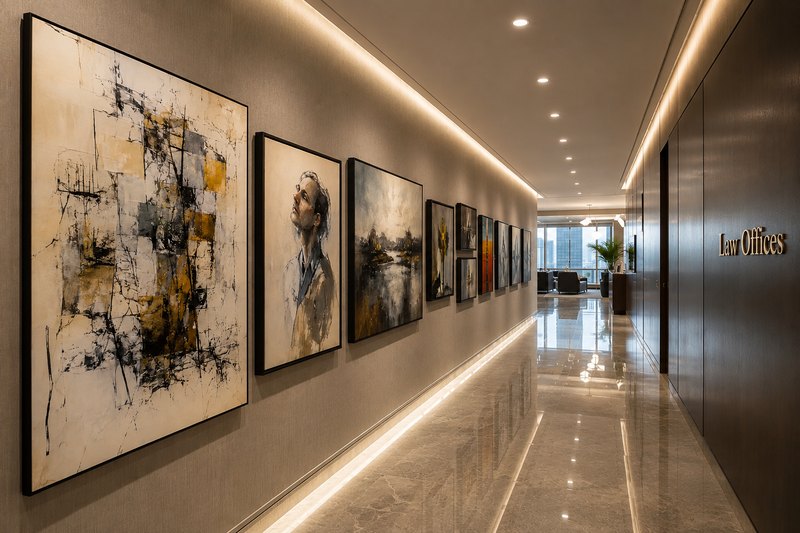
The Association of Corporate Art Advisors notes that corporate collections have expanded steadily over the past decade, driven by companies that treat art as a long-term strategic investment rather than an expense.
The challenge of rotating collections
Most corporate art programs operate on a rotation schedule. Pieces cycle through display spaces quarterly, seasonally, or in alignment with internal events. Each rotation means removing work from the walls, transporting it, and storing it until the next cycle. A company with 50 to 200 pieces in active rotation may have half the collection in storage at any given time.
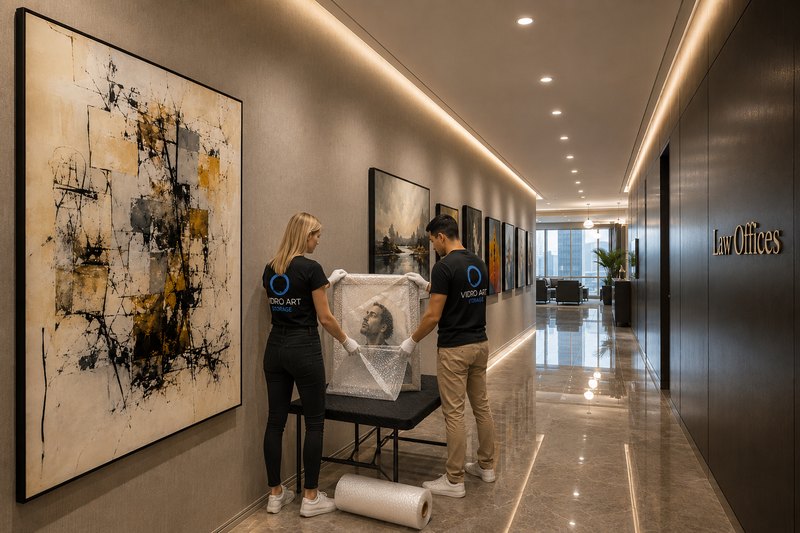
That creates a logistics problem. Every piece must be tracked, handled correctly, and housed in conditions that preserve it. Without a reliable system, pieces get damaged in handling, lost in transition, or forgotten in storage.
The risks of improvised storage
Companies that store art in office closets, mechanical rooms, or general warehouses expose collections to conditions that accelerate deterioration. Temperature swings cause canvas to expand and contract, cracking paint layers over time. Humidity above 60 percent promotes mold growth on paper, textiles, and organic materials. Dust settles on unprotected surfaces. Cleaning crews working in shared spaces have no training in art handling, making accidental damage a routine hazard.
The American Alliance of Museums recommends that fine art be stored at a stable temperature near 70 degrees Fahrenheit with relative humidity between 45 and 55 percent. A supply closet on the 14th floor of an office tower does not come close.
Dedicated storage for corporate collections
A professional fine art storage facility maintains the environmental conditions, security, and handling protocols that corporate collections require. Climate control runs continuously. Each piece is inventoried and tracked from intake through retrieval. White-glove handlers manage every movement, eliminating the risk of damage from untrained staff.
For companies that rotate art regularly, a storage partner also streamlines logistics. Scheduled pickups and deliveries align with the rotation calendar, and the inventory system tracks which pieces are on display, which are in storage, and which are due for conservation review.
Vidro Art Storage serves corporate clients across Los Angeles with The Premier Art Storage for collections between rotations. Climate-controlled vaults, professional packing, local transportation, and art installation are available individually or as a managed program. To discuss storage for your corporate collection, call (213) 537-4266 or email info@vidroartstorage.com. You can get a quote today.
Sources: American Alliance of Museums (AAM), standards for the care and handling of collections; Association of Corporate Art Advisors.
Get a Free Quote
For corporations managing art collections between rotations, Vidro Art Storage provides climate-controlled storage, professional packing, transportation, and installation in Los Angeles. Reach the team at (213) 537-4266 or email info@vidroartstorage.com.