Storing and Caring for an Inherited Art Collection
Inheriting a collection brings a set of decisions few people are prepared for. What to keep, what to sell, what to divide among family, and what a given work is even worth. Those decisions take time, often many months. The art needs care during all of it, before a single choice is made.
The collection needs a home before the family needs answers
When a collection passes to heirs, it usually stays where it has always lived, in the residence of the person who assembled it. That home may now be for sale, being emptied, or sitting unoccupied while the estate is settled. An unoccupied or transitional house is a poor place for fine art. Climate systems get turned down or off, nobody is present to notice a leak or a spike in humidity, and the schedule for clearing the home rarely matches the schedule for deciding what happens to the collection.
You cannot divide what you have not catalogued
Almost every decision an heir faces requires a list. Dividing works among family members, choosing what to keep and what to sell, and valuing the collection for the estate all depend on knowing what is there and what condition it is in. A professional inventory, with condition notes and photography of each piece, gives the family one shared and factual record to work from. Memory and a drawer of old receipts do not settle a collection. A documented list does.
Transitional storage is where damage happens
The improvised options are the tempting ones: leave the works in the emptying house, move them to a relative's garage, or rent a general purpose unit on short notice. Each exposes the objects to uncontrolled temperature and relative humidity, which drives the repeated expansion and contraction of canvas, panel, paper, and frame. Collection care guidance has consistently identified handling and movement, not undisturbed storage, as the point at which most damage occurs, and improvised arrangements add handling at every step. Climate-controlled, monitored storage removes that risk while the family takes the time it needs.
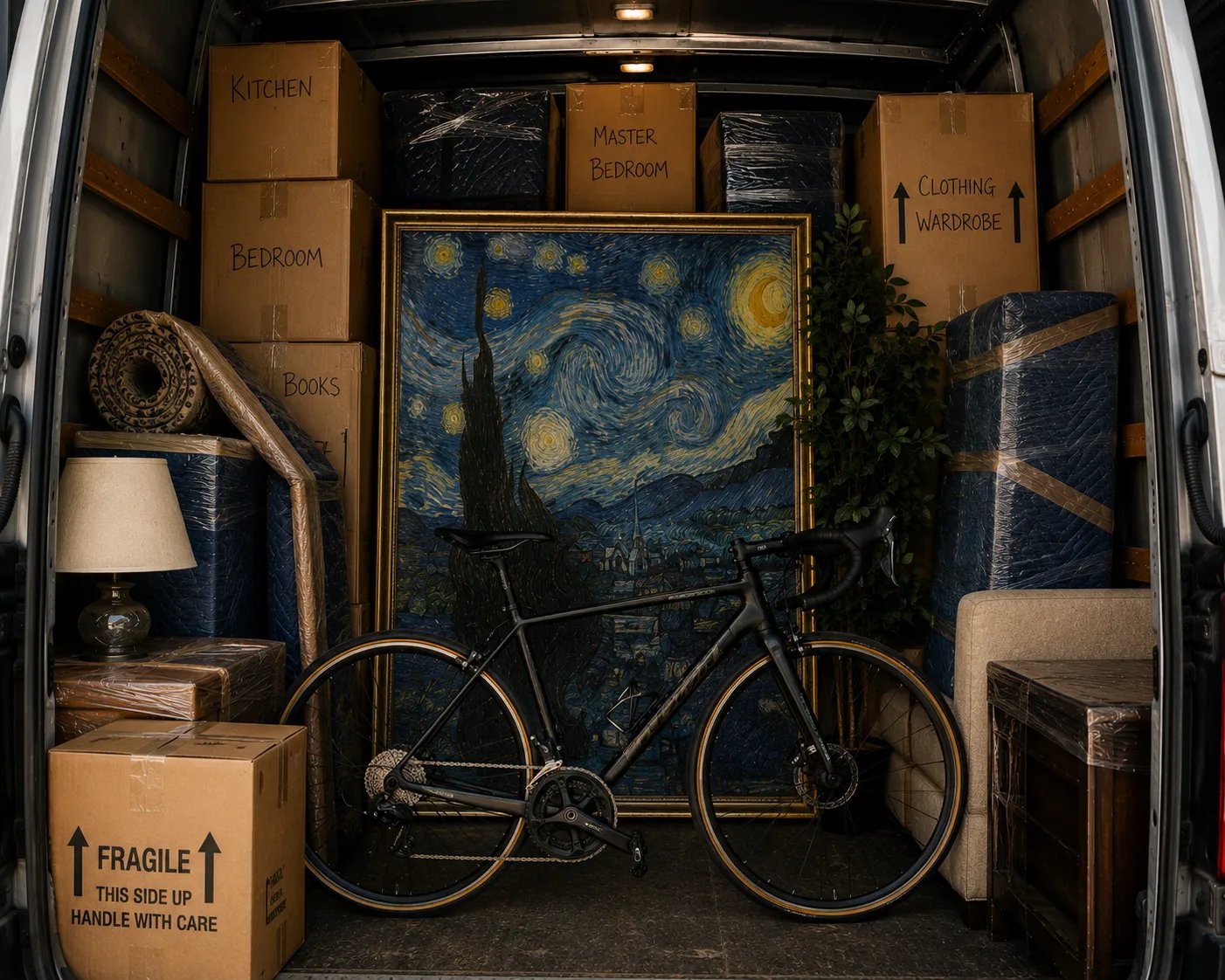
One team, from the wall to storage
The simplest path through a hard season is a single professional partner. Vidro handles pickup, packing, climate-controlled storage, cataloging, and delivery in-house, so a family deals with one team from the wall to the vault and back, on a schedule set by them rather than by a closing date. When decisions are finally made, the works are documented, protected, and ready to move to their new homes. The Premier Art Storage.
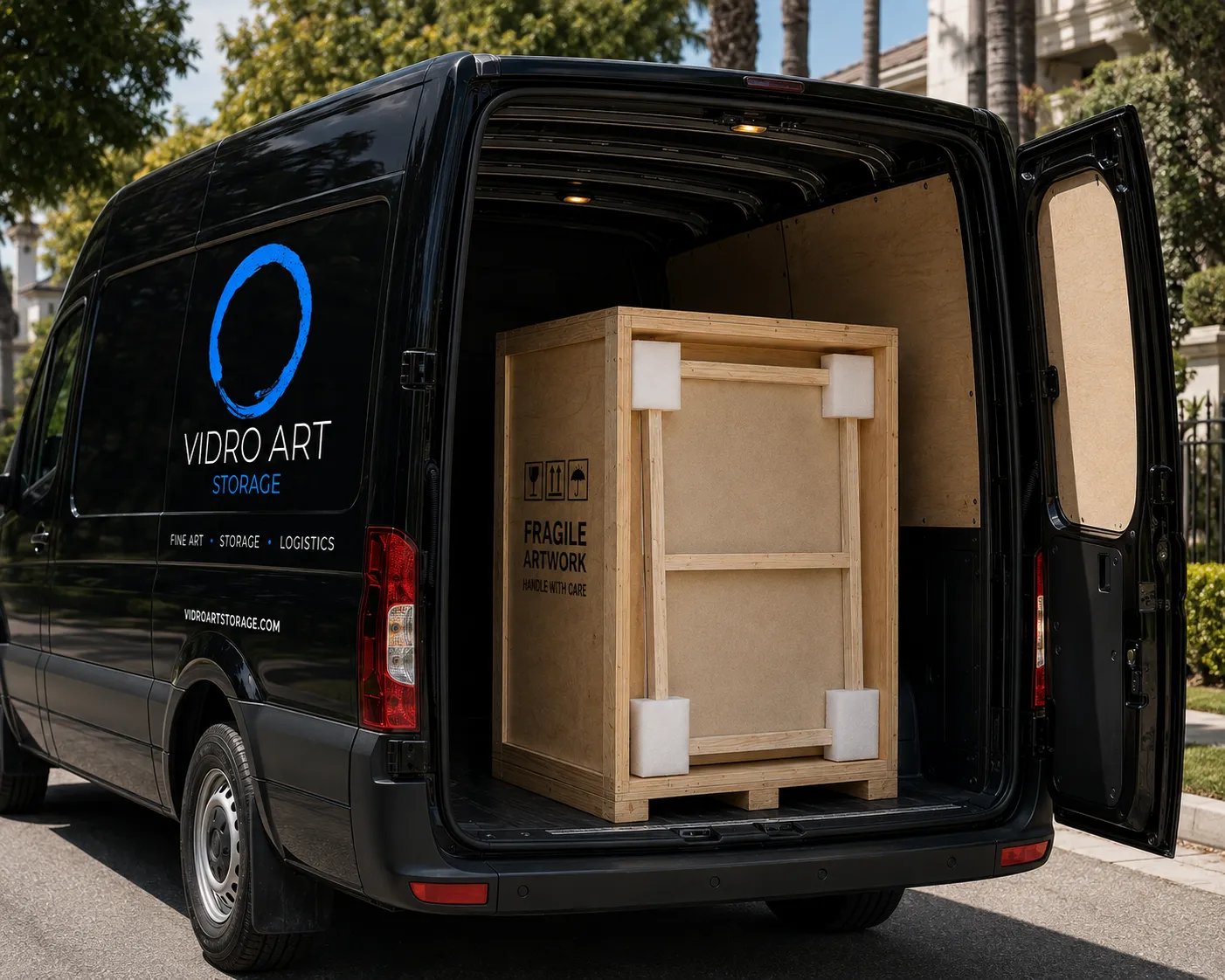
If a collection has passed to your family and the decisions are still ahead of you, it is worth a conversation before the house changes hands, not after. You can get a quote today.
Related reading: Why You Should Never Use Local Self-Storage for Fine Art and Storing Fine Art During a Home Renovation.
Sources: American Institute for Conservation collection care resources; Getty Conservation Institute guidance on art handling risk; American Alliance of Museums environmental standards.