Art Storage for Gallery Owners: Consolidation, Transit, and Between-Show Inventory
A gallery's hardest storage problem is not the art on the walls. It is everything that is not on the walls: last show's unsold pieces, next show's early arrivals, and consignments waiting on decisions.
The back room is the real storage problem
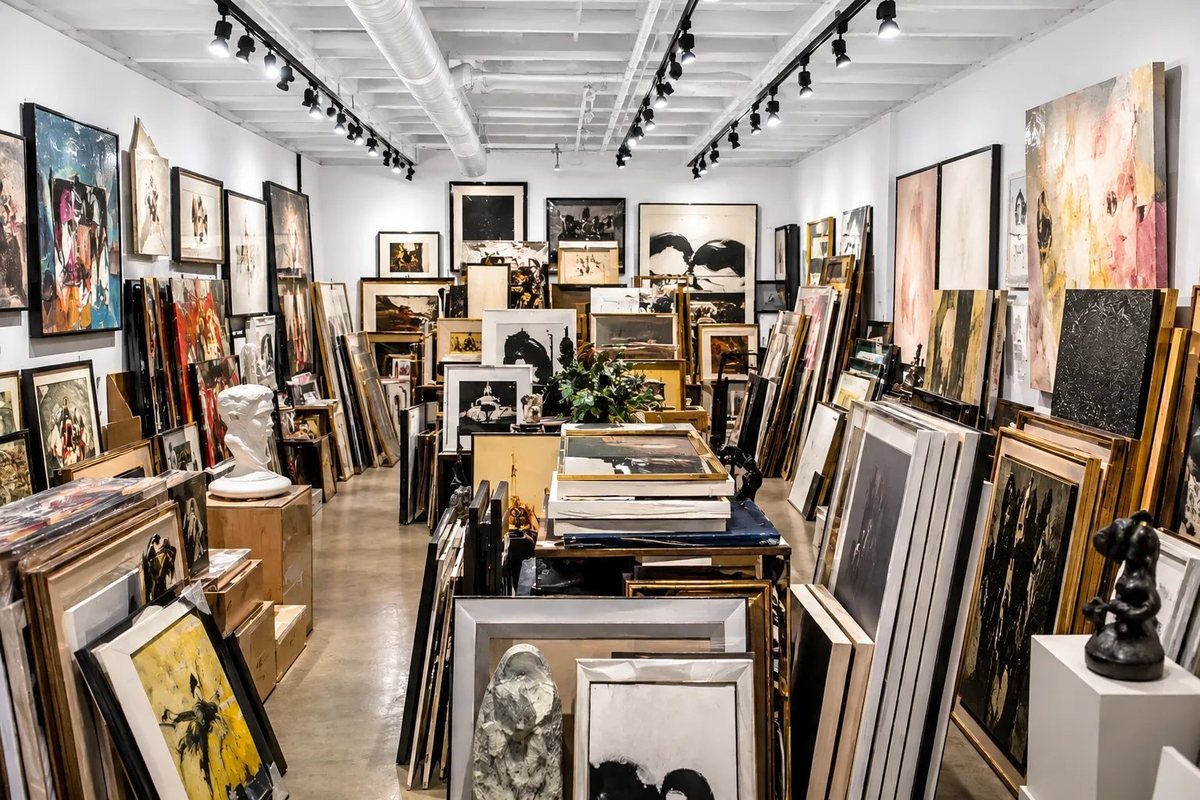
Walk into the back room of almost any gallery and you will find the same scene. Crated works leaning against a wall, last month's unsold pieces wrapped in moving blankets, and somewhere behind them, a consignment a collector has not decided about. The exhibition space is curated to the inch. The back room runs on hope.
That back room is where damage happens. The Getty Conservation Institute and professional conservators have said for years that most damage to artwork occurs during handling and moving, not while a piece hangs undisturbed. A gallery back room maximizes exactly the wrong variable: pieces get shifted every time something new arrives, by whoever happens to be present, in a space that was never climate-planned.
Think in three inventories, not one
Gallery inventory sorts naturally into three pools, and each has a different storage answer.
Active inventory is the current show. It belongs in the gallery.
Transition inventory is what just came down and what arrives next. This pool moves the most and gets handled the most, which makes it the highest-risk pool. Professional short-term storage during show changeover means each piece is moved once, by trained handlers, into a climate-controlled environment, instead of being shuffled around a back room for three weeks.
Deep inventory is unsold work from prior shows, artist consignments awaiting decisions, and pieces held for clients. This pool does not need to be within arm's reach. It needs to be preserved, documented, and retrievable on a phone call.
Consolidation is the quiet operational win
Galleries accumulate storage the way estates accumulate keys. A few pieces at the framer, some at a partner gallery, crates in a rented unit that was never meant for art, and the rest in the back room. Every location is a separate security question, a separate climate question, and a separate trip.
Consolidating deep inventory into one professional facility collapses that sprawl. One environment held at the museum standard of 70 degrees Fahrenheit and 50 percent relative humidity. One documented location for the collection schedule. One call to retrieve a piece when a collector asks to see it again.
Between-show logistics, handled once
The changeover week is when galleries need the most hands and have the least time. White-glove pickup at the gallery, climate-controlled transport, and storage intake with condition documentation turn the changeover from a week of improvised labor into a scheduled appointment. When the piece sells or the next show calls for it, delivery runs the same way, in reverse.

Documentation matters as much as the handling. Cataloging with photographs and condition notes at intake means the gallery can answer an artist's "where is my piece and what condition is it in" with a record instead of a walk to the back room.
What this looks like in Los Angeles
Vidro Art Storage works with galleries across Los Angeles, Beverly Hills, Santa Monica, and the surrounding areas. The facility is museum-grade and climate-controlled, with 24/7 security monitoring, restricted access, and custom racking for oversized works. Pickup, packing, cataloging, and delivery are all in-house, so a gallery deals with one team from wall to storage and back. The Premier Art Storage.
If your back room has become your storage strategy, it is worth a conversation before the next changeover, not after. You can get a quote today.
Related reading: Short-Term Art Storage During Renovations and Events and Storing Fine Art During a Home Renovation.
Sources: Getty Conservation Institute guidance on art handling risk; American Alliance of Museums environmental standards; American Institute for Conservation collection care resources.