Why Interior Designers Need a Fine Art Storage Partner
An interior designer working on a high-end residential project in Los Angeles will, at some point, be responsible for a client's art collection. The collection may need to come off the walls during construction. It may need to be held while new pieces are sourced. It may need to rotate between rooms as the design evolves. In every one of these situations, the designer who has a professional art storage partner already in place handles the transition cleanly. The designer who does not is left improvising with blankets and a spare bedroom.
The gap between design vision and art logistics
Most interior design firms do not include art logistics in their standard scope of work. The focus is on spatial planning, material selection, lighting design, and furnishings. Art is often treated as a finishing detail, something that gets placed once the room is nearly complete. But for clients who own serious collections, the art is not a finishing detail. It is the most valuable and most fragile thing in the room, and it needs to be accounted for from the first day of the project, not the last.
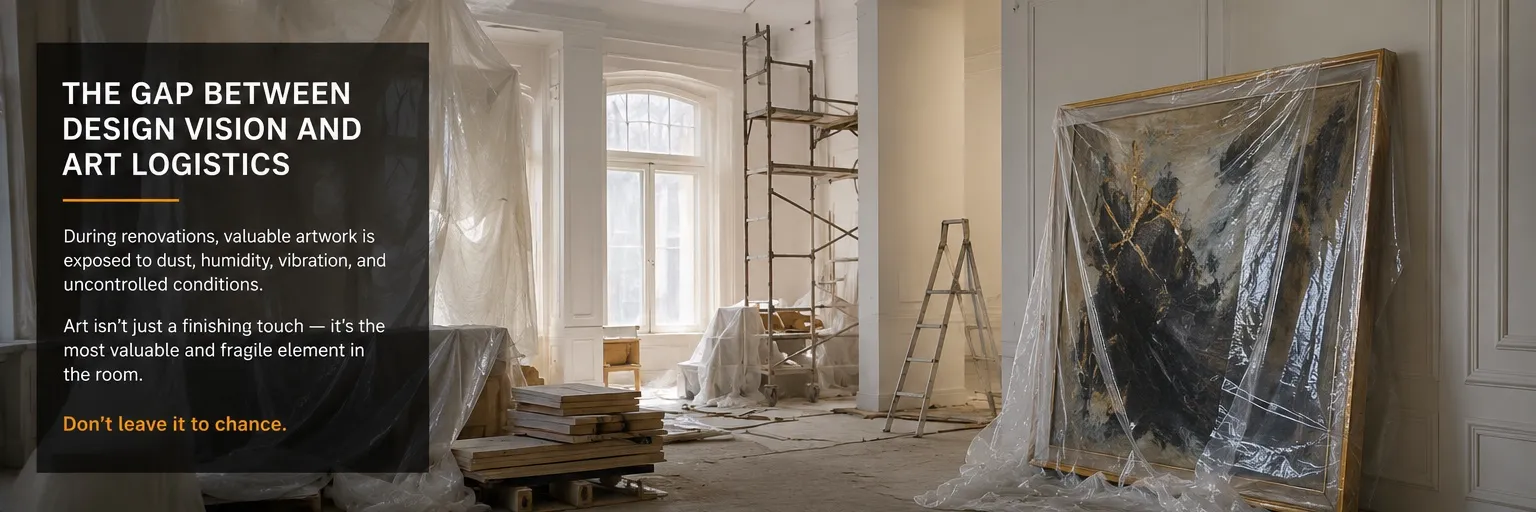
The practical problem is simple. A renovation that takes four months means four months of dust, foot traffic, shifting humidity, and vibration. A painting left on the wall during that period, even if it is covered, is exposed to conditions that a conservator would describe as uncontrolled. The designer who moves the collection into professional storage before demolition day eliminates that risk entirely.
What professional art storage provides during a design project
A climate-controlled fine art storage facility maintains conditions that a residential space under construction cannot: stable temperature around 70 degrees Fahrenheit, stable relative humidity around 50 percent, and zero light exposure. These are the conditions that pause aging in paintings, works on paper, photographs, and textiles. They are also the conditions that disappear the moment a contractor opens a wall or shuts off the HVAC system for a week.
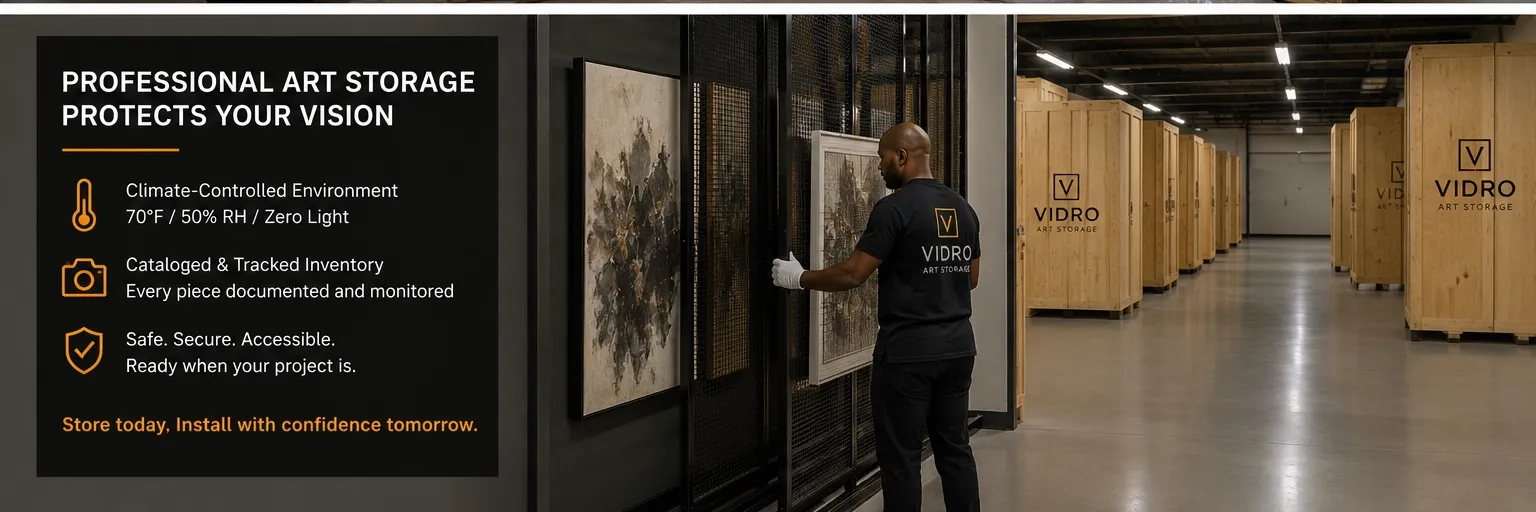
Beyond environmental control, a professional storage partner provides cataloging and inventory management. Every piece that leaves the client's home is documented, photographed, and tracked. When the designer is ready to place art in a finished room, the inventory is current and the retrieval process is scheduled, not scrambled.
How designers benefit from a storage relationship
A designer who can offer art storage coordination as part of a project scope adds a service that most competitors do not. For clients with collections valued in the six and seven figures, knowing that their designer has a vetted storage partner is a differentiator. It signals that the designer understands the full picture, not just the aesthetics but the care and handling of what matters most to the client.
It also simplifies the project timeline. Instead of working around art that cannot be moved because there is nowhere safe to put it, the designer clears the space completely, works without constraints, and brings pieces back when the room is ready. The result is a cleaner installation, fewer compromises, and a client who sees that every detail was handled.
When to bring storage into the conversation
The right time to discuss art storage with a client is during the initial project planning phase, before any construction begins. If the scope includes rooms where art is currently displayed, the designer should walk the collection with the client and identify which pieces need to be removed, which can stay, and what the timeline looks like for each.
For projects that involve staging for sale, the calculus is different. The client's personal collection may need to come down entirely so the home can be staged with pieces that support the listing. Professional storage keeps the personal collection safe and accessible for the move into the next residence.
The standard for The Premier Art Storage
Vidro Art Storage works with interior designers and architects in Los Angeles who need a reliable partner for client collections during renovations, redesigns, and staging projects. Climate-controlled storage, professional packing and crating, local transportation, and art installation services are available as a complete package or individually. You can get a quote today.
Related reading: Storing Fine Art During a Home Renovation and How Light Damages Fine Art: A Practical Display Guide for Collectors.
Sources: American Institute for Conservation (AIC), environmental guidelines for collections in transit; Getty Conservation Institute, climate specifications for fine art storage.
Get a Free Quote
For interior designers and architects who need a professional storage partner for client art collections during design projects, Vidro Art Storage provides climate-controlled storage, packing, transportation, and installation in Los Angeles. Reach the team at (213) 537-4266 or email info@vidroartstorage.com.